
Build · Public
The Feed & The Thread
A daily two-voice podcast on what's happening across UX.
Challenge
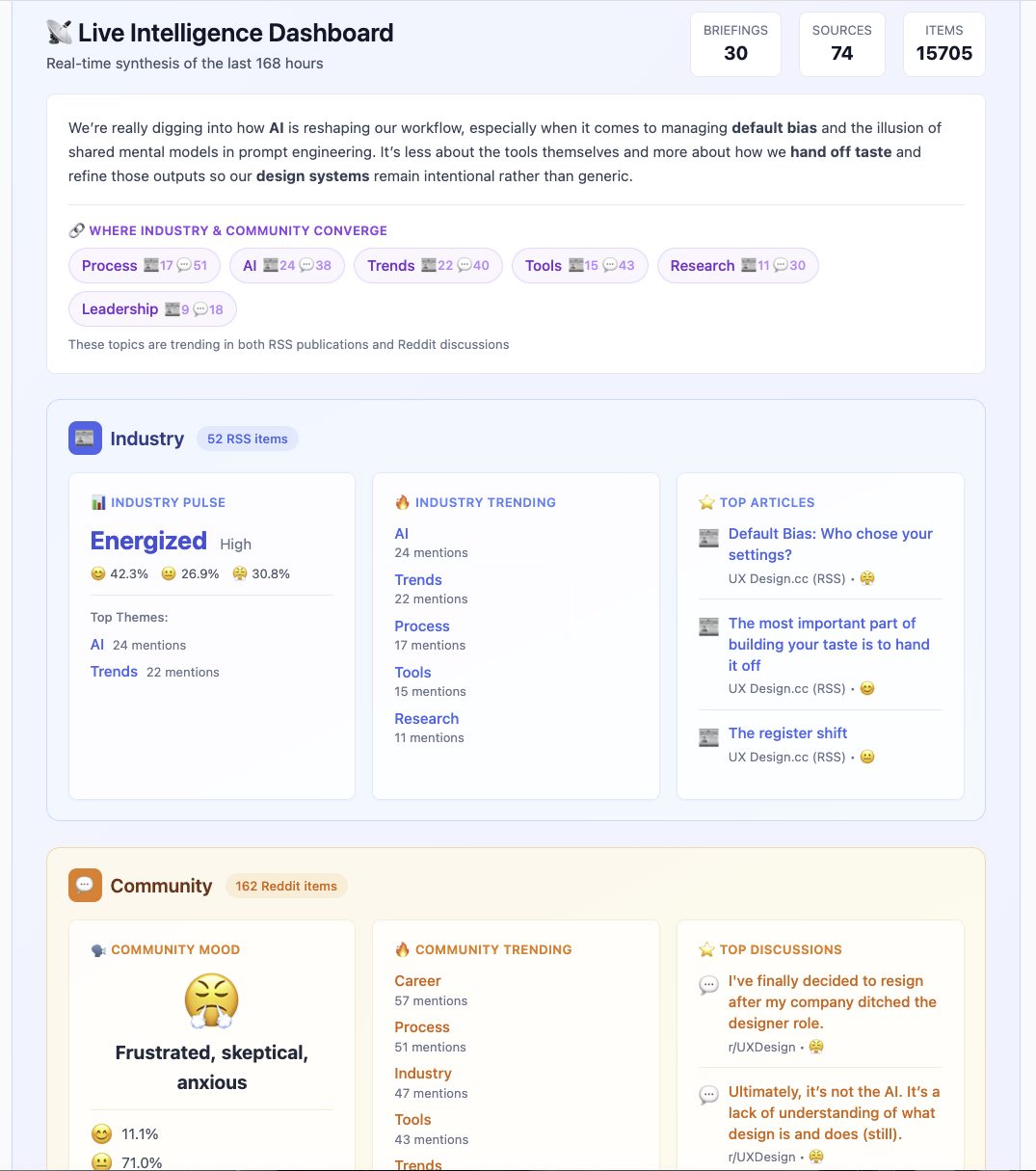
Keeping current in UX means watching a lot of scattered places: blogs, newsletters, and a dozen corners of Reddit. I wanted that awareness without spending an hour every morning chasing it down. So I started by polling the feeds and subreddits that matter and sending myself and a few friends a daily email briefing, sentiment analysis included. That briefing still lives inside my internal dashboard.
Build
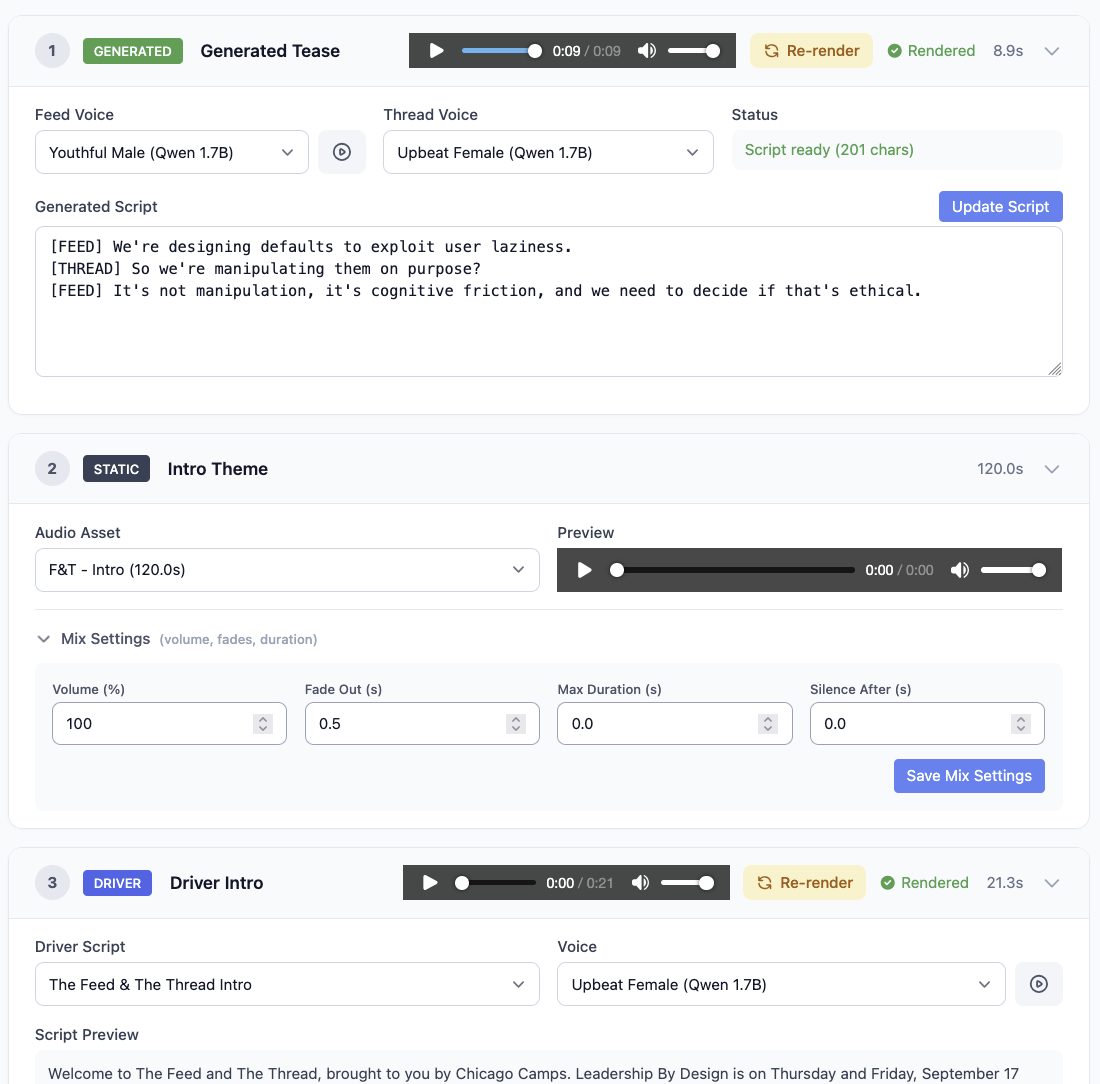
At the core is a daily monitoring pipeline that polls the industry feeds and the community subreddits, summarizes what's moving, and gauges the sentiment around each story. As I started working with text-to-speech, I looked for a way to deliver that briefing as something more human than a wall of bullet points, and it became a conversation. Two voices carry it: the Feed speaks for the industry side, the blogs and the newsletters, and the Thread speaks for the community and the discussion on Reddit. Each morning I get the day's briefing, edit it by hand, then stitch and export the two-voice episode. The automation handles the gathering and the first draft, and I stay in the loop for the judgment.
Outcome
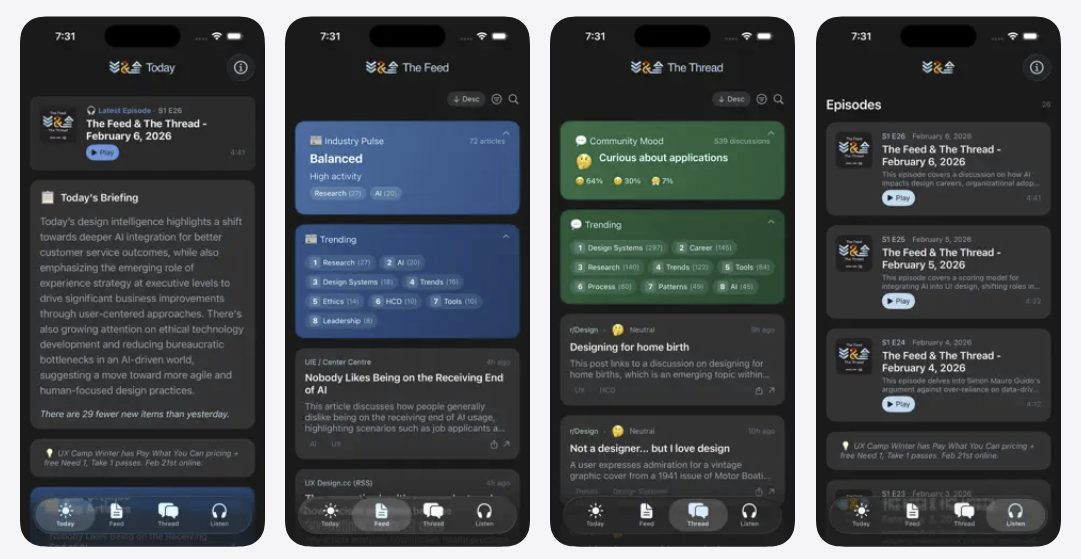
The result is a new episode every day on feedandthread.com, covering what moved across the UX industry and the community. It also pushes to an iOS app that gathers those same feeds and threads under one roof, for anyone who'd rather read the sources behind the conversation.
The Stack
I build the systems with Claude as my pair, working the hard parts until something holds. From there, Qwen carries the ongoing work (the drafting, the summarizing, and the rendering) on hardware I own. Nothing here calls an external model API or bills by the token, which is much of why one person can sustain this much: the judgment stays mine, the repeatable work is automated, and each new build costs almost nothing to add.
- A daily polling pipeline across feeds and subreddits
- Local LLM (Qwen) for the summaries and sentiment
- Local text-to-speech for the two voices
- Mac Mini M4 for development, a dual-GPU Linux server for inference
- An iOS app for delivery